2010. október 22., péntek

The SossusFly

Long time no see...
I always have an excuse not updating the blog, and now it is my family. 
Finally the girls arrived. Even if their entry into Namibia wasn't as smooth as it could have been. Freakin bureaucrats... But well, they are here and that is what matters. And I've been spending all my free time with them. 
Flyin' and family, things couldn't be better. 


But here I am again. 
East abeam WBV

And as my Hungarian readers asked me to write and post some pictures on the routes I fly this post is going to be dedicated to the SossusFly scenic that we use to fly quite often. A roundtrip that you cannot be tired of. An amazing scenic flight over world's highest dunes in the Namib Sossusvlei area, the Kuiseb Canyon and the Diamond Area as well as some shipwrecks along the Atlantic coast. And here are a couple of pictures as well.
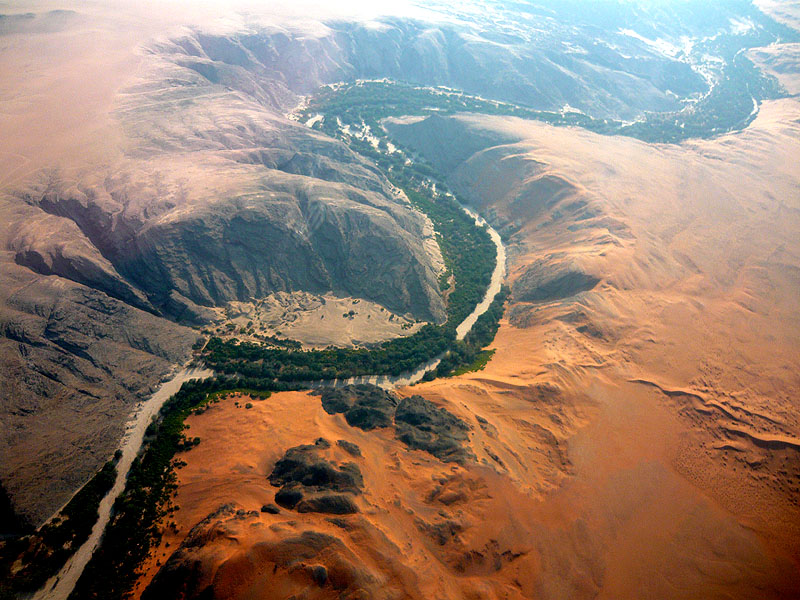
Kuiseb river, a natural border between the sand and the stone desert


The SossusFly is a 600 and something kilometres long flight. Usually two hours and a couple of minutes. 
It first takes you over the stone desert to the South, past Walvis Bay towards the Kuiseb River dry river, which we usually meet at the Swartbankberg. 
Swartbankberg


The Kuiseb is a border between the sand and the stone desert. Passing the Gobabeb Desert Research Station and some topnaar bushman villages we get to the canyon of the Kuiseb river. A really wild and fantastic formation. 
Topnaar bushman setlement along the Kuiseb


After flying for a while on both sides of the canyon we get to the Zebra pan, where we can spot some animals (zebras, ostriches, oryx...) we take a Southerly heading and enter the wast sand desert, the Big Namib towards the Sossusvlei area. 
Tsondabvlei


Passing the Tsondab dry river and vlei there are petrified dunes, proof of the prehistoric age of this desert. The changing dune world warns us that we're soon at the Sossusvlei area, flying towards the Tsauchab dry river valley. 
Dune 45


The valley is the so called Dune Corridor. With the worlds highest dunes on both sides. These dunes can reach up to 400 meters. And because of having winds from different directions the dunes here are more sided. The star dunes. Most famous of them being the Dune 45. Over this dune we turn West and follow the valley, passing quite a few vlei's (clay pans). Here's an other very famous vlei, the Deadvlei, with quite a few dead and soaked acacia trees. Right after passing the Deadvlei we are at the end of the valley, where the Tsauchab river dissapears under the sand dunes. This is the actual Sossusvlei. 
Again we have a longer trip over the almost endless sand. Depending on the temperatures the desert is playing a colourful palette. From greyish magnetite to reddish iron oxide. And we are approaching the coast and the Diamond Areas. There are three more camps here, abandoned. Skeletons from the past. 
Diamond camp No. 2

Leaving the camps we fly to the coast to pass by the famous Edward Bohlen shipwreck. A one hundred meter long cargo ship that ran to ground in 1909. Also proof of how quickly the desert claims the ocean. The shipwreck today is couple of hundred meters from the coast. As the sand moves into the Atlantic 30 centimeters a year.
Along the coast there are lots of seal colonies and a the beautiful contrast of the desert dissapearing right in the ocean is breathtaking. 
Speeding North along the coast we pass the Shaunee shipwreck. And the Langwand (Long Wall), where the sand falls steeply into the water.
Langewand with a fog stripe


Sandwich harbour is our next destination. A huge bird sanctuary with enormous flocks of flamingos, cormorans, pelicans. 
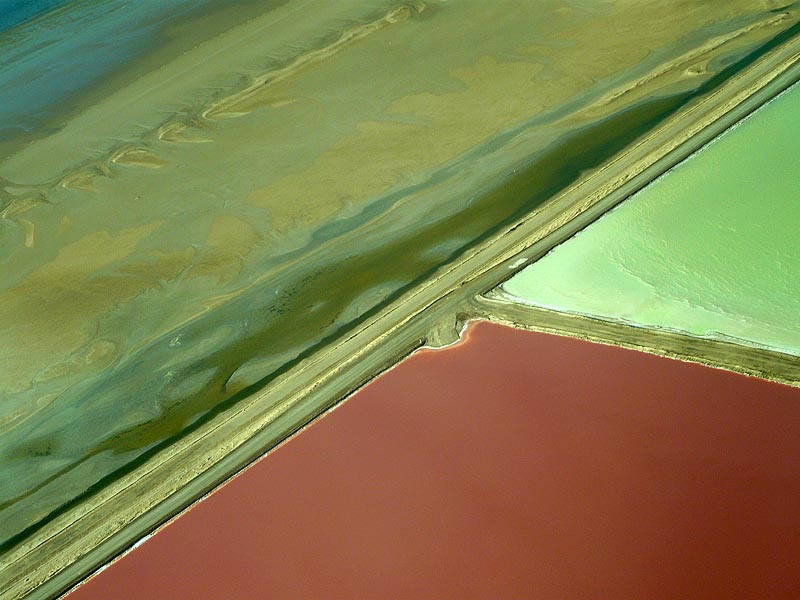
Salt works at Walvis Bay


And we are back at the Kuiseb river. More exactly the Delta of the Kuiseb river. With the Walvis Bay salt pans on the Northern side.
Walvis Bay harbour and V5-FLY


In a couple of minutes we are West abeam Swakopmund. A quick glance on the Jetty, the Lighthouse, gears down... and we are on right base 17. 
A Pleasure Flights 210 on my tail

2010. szeptember 6., hétfő

On Namibian stuff

As I promised here's what awaits you if you get hired by a Namibian company.
First of all you will need to validate your license. This is not a great deal. You will need to take two exams. A Namibian Air Law and a Radiotelephony. For Air Law there is a small leaflet, you read it once and you will easily pass the test. Mainly ICAO stuff. 
Geluk (FYGK) pick up day
The Radiotelephony is dependant on where you do it. If you have the possibility to chose go for the exam with Pierre, a pilot and ATC in Walvis Bay. He has a written exam on TIBA and other freqvencies as well as radio failure procedures. Then he will brief you on the Namibian airspace specifications. One of them being the "talk-talk-talk". There is no radar yet for the airspace here. So no transponder codes are given to airplanes. So you need to make your reports regularly. And as you start flying you will see how important the "talk-talk-talk" rule is. Flying on a busy Sossusvlei scenic day with ten other planes around you is quite fun...
Over the big Namib
If you are done with that the DCA will sooner or later issue you a Student Pilot License, so you can start doing your C210 type rating. Which for some might sound crazy, but that's how it is these places. Type rating for every airplane you fly (be it a 152...). But this will mean just a couple of hours flying on type with an instructor.
Walvis Bay harbor
For your license validation you will also need to have a license verification. This means that the namibian DCA sends a request to your home DCA asking them if your license is genuine or you just bought it on the flea market. If you have any contacts to your DCA let the Namibians know about it as in the majority of cases their database is outdated and they are sending requests to non existing addresses. Also you may try to ask for a verification yourself.
In the meantime your company will send a couple of papers to the Ministry of Home Affairs requesting a work visa or work permit. 
Little airplane in the canyon
During this procedure - depending on company - you start your line training. You will be put in the right seat anytime there is a free one. I managed to do around 40 hours right hand.
One day your work visa arrives and if you are lucky enough your license validation will also be there. And you start flying left hand seat with one of the company's senior pilots. Then one day you get signed off and start flying on your own.
There might seem to be lots of waiting, lots of fighting, but the rewards are high! You are finally flying...

2010. augusztus 31., kedd

Pics and pax

Having crappy internet and being focused to get online prevented me from updating this blog regularly, but now that I'm online I will start being more regularly here. For a start here's a couple of "commercial flying" pictures (some made by me, some by Tobi).

On the beach

Entering Kuiseb canyon

Tsondabvlei

One of my first passenger groups
My next entry will be on Namibian license validation and work visa process. Till then flying low...

2010. augusztus 24., kedd

Online


The fleet: FLY FOR FUN

Had a pretty long road to here but finally made it. Papers sorted out. Did lots of hours right hand seat and after getting my license validation I had quite a few left hand seat flights (let's say PICUS) when finally the company and my colleagues decided that the time has come for me to go online. 

Backtracking my first bush strip: Namib Naukluft Lodge


I was lucky enough to have all my papers done and sorted by the company. I only had to sign them and the rest was taken care of. Well, except the mandatory radiotelephony and air law exam. But those are really just a formality here in Namibia. Check them quickly and forget about them.


Am landing RWY17: great shadow (photo by Kike)

The next step is much harder. Flying. You'd think we have fantastic allover sunny days here in Swakopmund... Well, nope. This is the Skeleton Coast. Fog comes and goes unpredictable. You take off on a bright afternoon, when you can see the Brazilian coast on the other side of the Atlantic, for a standard Sossus (will have my next entry on this one) and when you come back two hours later visibility is just above a mile with a 500 feet base (oh, not AGL!). 
SVFR... Swakopmund VFR.
A view towards Sossusvlei and Tschauhab river valley (Dune Corridor)

This could be the end of the world

2010. augusztus 9., hétfő

Great flying

With all the paperwork done and tests passed I'm just waiting for the Namibian DCA to issue my validation and then go online as soon as possible and as soon as Andy gives me the go. 
The season is picking up, there are more and more flights so the pilots get to fly more and more.
Bush Birds are busy. And fortunately there is lots of "line training" flights for me as well.
One of the nicest trips we do is flying to Opuwo for a Himba excursion. I did it two times last week. A visit to a Himba village is really great experience. On both flights we had to take off from Arandis, a nearby town, where the fog does not reach in the morning. The flights is over fantastically varying terrain. From the stone desert surrounding Swakopmund area to the savanna. There are huge prehistorical remnants of volcanoes, flat topped mountains, craters and canyons on the way.
Table mountains

Opuwo is the gate to Himba "country". The trips are organised by the Opuvo Country Lodge, a luxurious resort on the hilltop above the town. Looking northwest on the valley where the Himba villages are. I'll let you the pictures show you the tale a bit and in the future I will focus again on the flying side of things.

The Brandberg


Opuwo County Lodge


Opuwo Airport apron and a couple of local souvenir sellers


The famous Himba hairstyle and kids in front of a traditional hut


2010. július 31., szombat

Flying in Botswana and Namibia

As I promised this entry will be a quick answer on the questions I get. So here we go:

Do I have to go back to my country waiting for their call, or I need to stay over there for days, weeks, months... waiting to get hired?
Botswana: Well, don't expect an interview like you would anywhere else. Companies don't really do interviews. Except Sefo a formal one. They will just hire you from one day to the other. So yes, you need to stay there. When they need people is usually for yesterday, so they will not call you from wherever. They will pick the next available guy on site. Companies there also like to see if you can stick to the place. Maun is a really "boring" little town (no offense guys). There's not much to do. So companies will hire you only after one or two months, so they know you're not going to run home after a week. But what I can tell you is that from all those guys I was with in Maun this everybody got hired who sticked for 3 months. 
Namibia: the same applies here. The only company that will hire you through phone and skype is the one I work for. But then I was hired because I spent a month here got to know the pilots, made lots of friends. And when they had a vacancy they told the boss they want to fly with me. Any other company works as in case of Maun.

In case I need to wait over there, how much money I need to carry with me?
Botswana: in Maun the cheapest place to stay is Audi Camp (it is worth checking their site for What to expect and What to bring). Is around 2 euros a night (but you need to bring your tent, matress, sleeping bag). You need to tell you are a pilot. Beer is 1 euro a bottle. Transportation from Audi camp to the airport is 50 cents. You might calculate with this. I'd say 500+ euros a month. Other place to stay is the Old Bridge Backpackers, around 5-6 Euros a night. It is a very nice place just on the shores of Thamalakane river. With great bar and lots of visiting pigeon sized bats after sunset. Namibia: is a bit more expensive. Cheapest accomodation in Swakopmund is Villa Wiese, pilot rate is 85 Namibian dollars (if you can get it), 8.5 euro per night, in a dorm, but with breakfast and wireless internet included. In Windhoek dorms, like the The Cardboard Box or Chameleon Backpackers are 100 namibian dollars  per night(10 euro).

What can you tell me about malaria? Is it a real problem?
It is not an issue. I don't know anybody in Maun infected by malaria. In Namibia it is the same. So forget about it. Worst case you will have to deal it after you got infected (usually you get Coartem), as you cannot fly on anti-malaria drugs. But I suggest you bring lots of insect repellents to Maun as there are swarms of biting bugs in the night.

Let's assume I'll be hired. May I go back to Europe for a few days to renew my CAA licences whenever I need?
You will have your leave. As far as I know is at least 20 days, but some companies will give you a month leave. Although there are seasons, mainly the high season, when you will not be able to leave.

Do I have to spend lots of money for any kind of conversion, medical,and all the crazy paper works, once get hired?
Majority of companies are willing to bond, so I did not spend money on these here. Some of my friends liked to pay for themselves. The paperwork is mainly sorted out by the company, or they are helping you in sorting it out.

What documents do I need to carry with me?
All your pilot papers (license, logbook, any certificates you got from your flight training organization), an accident and incident report from you DCA, birth certificate (with english or having an english translation), police clearence from your countries police, a bunch of passport photos (let's say 10). But, I was never asked for any of them here in Namibia. The DCA wasn't even curious enough to ask for my logbook. In Botswana you might need all, of these papers.

As I understand I have to camp there in Audi Camp what type of clothes and tent do I need to carry?
You do not need to stay at Audi camp, but that is where the majority of guys are staying and as i mentioned above it is really cheap. Any tent will do if it is water tight. Lots of rain there in December, January, February. And there will be very-very hot. You will need an inflatable matress as well. Clothes for a hot summer. It is really hot even in the nights.
Do the companies do any interview? If any what type of questions do they ask? (I mean only related to flying or do they take psychometric test and all also).
Do not really think of these as interviews. Majority of companies do just a formal interview, not even aviation related. They will mainly be interested in your personality. It is only Sefofane who has some kind of a test before hiring, but even if you just write crap they will hire you if they like you (I know of a guy hired this way).
As I mentioned nothing too special, if there is any at all. Sefofane has interviews in Maun, they have a written technical and a psychometric (I posted this a couple of times here, but Sefofane has a good document on their recruitment procedure, download the PDF here). On the interview they will only ask questions that you had on the written exam.In Namibia most companies have interviews but nothing special. Mainly interested in your personality. The trickiest part is the psychometrics that some companies have here. Couple of guys failed them this year.

And what do the companies look in a person apart from flying to hire them?
They like you to fit in their team. Party with the guys, stuff like that. Just give yourself and it will work out. Maun is a pretty isolated place on earth, so they want to see that you will be able and willing to stay there for a year or so. This is more important that your flying skills. You'll anyway do 50 hours right and 50 hours left seat flying, so I might say, they will kindda teach you to fly again! The same applies for the majority of companies here in Namibia as well, except maybe the amount of training hours vary.

There is a lot's more info on these in my first entries from 2008 as well.

My opinion is to not think too long, decide and then give it a go! I spent 2 months in Maun and never got a job there as the hiring season was over, I've been a month in Swakopmund and the hirings did not start. But made friends and after I went home to Hungary I got the call and ended up flying in Namibia.

2010. július 27., kedd

Tropic of Capricorn

It is a long time since I've posted here, but my excuse is that I was busy flying the routes from right seat (had more then 30 hours this month) and taking some instruction in the 210, and then taking the practical exam. 
Witwater apron, but the runway doesn't look much better

The training flights were with Ingrid, a new intructor at Bataleur's Flight school. She's pretty relaxed and will not put you under pressure. But then she has a pretty decent past flying everything from small to big. 
The exam was flown with Jacques, a local DCA examiner. Just some aerial work: turns left-right, stalls in different configuration, powerless landings and a couple of full load takoffs and landings. So I had my first passangers: the ramp guys at Swakopmund airfield.
Swakopmund
The funny thing in it is that I do this with a Namibian Student Pilot License.
And now the company training is still on. Till I do not get my validation papers I can only fly right hand seats. But am flying the routes and practice the radio work. I enjoy these with my training captain Somatiko. 
Coming from Europe I'm used to full radar coverage, so once given a squawk we just fly around like flies, and don't really report except if we're asked by the ATIS. Here it is different, there is no radar coverage, so you must continuously transmit your position and your intentions. Wich is not a bad thing considering you have twenty airplanes flying the same route, with some of them coming up ahead. Own separation. And it works very good.
Except maybe if you are a newbie and doing your practice patterns at Swakopmund airfield in the afternoon and suddenly you have ten airplanes coming back from a Sossusvlei scenic and every pilot has other intentions. I was doing some full load checkflights when this happened. I was on left pattern RWY 17. And then some guys coming home were starting to use RWY 35. It was an interesting experience that would never happen back home.
FNG's at Kücki's: Nik of the skydivers. Stephan and Kike for Scenic

Lot's of new guys arrived as well. Most importantly my job hunting friend with whom I arrived here in March, Kike, went online with Scenic.
Sunday sports

Things really picked up paperwork wise as well. In the meantime my work visa arrived. So at the moment the only thing I need is a License Verification sent to the Namibian DCA by the Hungarian DCA. Bush Bird is fully booked for the next month, so I hope I will be online by then.
Although Swakopmund is not even one degree away from the Tropic of Capricorn which marks the most southerly latitude at which the sun can appear directly overhead at noon (here this is in December), it is pretty cold nowadays. Morning fogs, mist is very common. Mainly couple of miles inland and along the shore. This is due the cold Benguela Current. This creates the desert conditions at the shores of Namibia, and the persistent fogs that we now in Swakopmund at the Skeleton Coast and Namib Desert. Which led to lots of ships running aground. Like the Eduard Bohlen close to Conception Bay, one of the biggest now on the shores of Namibia. The ship was a 2,272 gross ton cargo ship with a length of around 100 meters.
Some days it doesn't even clear up during the day. Meaning that when coming back from a flight sometimes we need to use the railway approach RWY 35. But will write you about this later.

The Eduard Bohlen ran aground off the coast of Namibia's Skeleton Coast in 1909, in a thick fog.


My next post will be very soon, as I've got a couple of messages with common questions, and instead of answering them separately will post the FAQ's with the answers here.

2010. július 14., szerda

Walvis Bay salt pans

Had some flight school flying this week. And will have my Namibian commercial check ride on Monday. But will update you on the whole process next week. Until then enjoy some pictures taken near Walvis Bay over the salt plains.


2010. július 12., hétfő

Unusual weather over the desert

Last Saturday morning we had a pickup from Wolwedans with Captain Somatiko. Early morning fogs and low clouds are not unusual this time of year in Swakopmund. And we really got the soup for the departure. Visibility was not that bad, but the cloud base was settled somewhere around 1000 feet. Not your usual VFR day. But we did not have too much time to consider the possibilities. The passengers had to be in Walvis Bay at noon, so they can catch Air Namibia to Joburg. After takeoff we climbed on top and headed Wolvedans. There were clouds under us as far as we could see. But we were hoping that after a couple of miles the fog will end.
We flew all the way till the Dune Corridor until the we left the fog behind. To find fantastic crisp weather in the Wolwedans area. 
After picking up the passengers we climbed to FL065 and headed back. Just to realize that we cannot stay on top. If the cover stays closed we will not be able to land at Walvis Bay and not even in Swakopmund. So we went under. 
Well it was a ride. But we made it to Walvis Bay and the passengers even enjoyed the low flight above the dunes.
In the meantime paperwork is on it's way. As I mentioned I've had my radiotelephony and air law exams. And am waiting for the Student Pilot License (funny), required to be able to do my CPL checkout with an examiner.


The fogline at the Dune Corridor (Sossusvlei)


The fogline and the desert


Wolwedans apron


The bush pilots rest


Under the clouds, over the dunes 


VFR