2012. június 17., vasárnap

Mambo

Dar es Salaam birds eye
As it always happens we make plans and then life decides for us. So from now on you'll see my stories coming from the beautiful city of Dar es Salaam, the city of traffic jams. And the mighty Caravan. 

Coastal Aviation 5H-JOE leaving a bush strip

Let me get some more experience, and will be back to you with the stories of flying in the East African bush.
And here's the winner of the bush beauty contest, Coastal Aviation's PC12, 5H-FAB
Low Time Pilot's Low Time Pilot's Guide to African Bush Flying - 12.99€


2012. április 17., kedd

Soft field takeoff

I hear lots of times that taking off is easy, you just push the throttle all the way and let the airplane fly. Yeah baby! Or maybe not?


Let's see the case of the soft field takeoff. It can be applied not only if the surface is soft - like sand or wet mud - but in case it is rough, stony or the grass is long. In case of rough, stony runway with a normal takeoff we are stressing the tires, landing gear and the prop as well. If the runway is soft, wet or the grass is long then the problem is even bigger. The drag on the wheels increases the required takeoff distance. The drag can be so much that the airplane will not be able to reach the rotation speed! 
Now these stones don't really save a propeller
So we need to do something to get the weight of the airplane off the wheels as soon as possible. Thus reducing not only the drag of the soft surface but also the forces that stones and rough surface put on the wheels and propeller. We then get the airplane off the ground at a low speed and accelerate in ground effect, above the runway and free from the rolling drag of the wheels.
Propeller after normal operations
Start with 10 degrees flaps. Needless to say that 10 flyps will produce more lift at a low speed, thus taking some weight off the wheels early in the takeoff roll. Yoke should be held fully back, same as when you taxi, to keep the weight off the nosewheel and keep the propeller as high as possible to avoid chipping from small stones. As you add power the airflow from the prop makes the tail effective, and will create a tail-down force, it will take most of the weight off the nose. At this point, although the airplane will have a nose high attitude the nose wheel is still running on the ground, with the nose strut mostly extended.
Sand isn't your friend...
The nose-high attitude means that the wings are at an increased angle.  This is good, because it means that the wings will generate some lift even at a low speed. Not enough to fly, but it will decrease the load on the wheels. First of all if the field is wet/soft it gradually allows the tires to rise and start to surf on top of the mud. Secondly, on a rough terrain the wheels will not hit the bumps with big force. 
Soft field takeoff (via flickr/fireboat895)
Speed will start building up, the airflow over the tail will continue to increase and the nosewheel will finally come off the ground. If we would hold the yoke in the initial position, completely back, the nose would continue to rise, we wouldn’t be able to see where we’re going and we’d be dragging the tail on the ground. So relax a small amount of elevator backpressure so that the nose remains spmewhere around the climb attitude. If you keep the nose too high the wing creates too much drag. Just hold the nose high so that the nose wheel does not run on the ground anymore. As the airplane is accelerating further you will need to make small corrections to keep the nose in the proper attitude. 
With the increasing speed at one point the lift will be compensating for the airplanes weight and thus we become airborne. 
Soft field technique went wrong (read the article here)
Happy? Not yet... We're just a couple of centimetres from the ground, we have low speed and a high angle of attack, creating a huge amount of induced drag. At the moment we're just floating in the ground effect. But we've got rid of the nasty drag that was created by the rolling friction of the tyres. Lowering the nose slightly - but carefully, not to put it beck down - will help us get rid of more induced drag and gain a couple of more knots. As airspeed builds up just keep the airplane in the ground effect, let it accelerate to a safe climb speed. Upon gaining the desired airspeed simply start to climb out with Vx or Vy.


Here's a nice video on this topic:
Now, I need to point out that you shouldn't jump in the first airplane find a mudhole land there and then try to perform a takeoff. Always practice any new maneuver with an instructor on a paved runway until you are proficient.

2012. március 26., hétfő

210 ditching on the Etosha Pan

African Profile Safaris' Cessna V5 PTL plane crash-landed on the Etosha Pan on 2nd of January.
After ditching in the water
The plane had the pilot and an American tourist couple on board. They were flying from Ongava (FYNG) to Immelmann Airfield (FYIM) in Caprivi when it crashed into the Etosha Pan's water. The cause is suspected to be engine failure.
During disassembling
A helicopter of Expedite Aviation was hired to search for the plane and its passengers. The passengers and the pilot sustained minor injuries and the SAR helicopter brought them to safety. 
Ready to be transported to Windhoek
For investigation purposes the airplane had to be taken to Windhoek. And it had to be taken apart on site so it fits on a trailer.
Back those days flying as my wing (and was owned by Wings Over Africa).
The C210 in the background is V5-KIN of Bataleur Aviation

2012. március 21., szerda

UPDATE: Pilot job opening in Malawi


Bush&Lake Air Charters in Lilongwe, Malawi is looking for a pilot.
Requirements: Commercial license. A minimum of 500 hours. And logged hours on CT206 and PA32-300

Email CV's to info@bla.mw or claudia@bla.mw 
About the company: http://www.bla.mw/

UPDATE: B&LA is a small company with a Cherokee 6 and a beautiful new 206 (as far as I know G1000). The boss is a really really nice lady. She cares and looks after her pilots. She provides a house and a car too. Pay is somewhere around 1000 USD equivalent in Kwacha. Malawi is great to live. You have everything you need, school, supermarkets and so on.
Low Time Pilot's Low Time Pilot's Guide to African Bush Flying - 12.99€

2012. március 20., kedd

Soft field technique

This Skeleton Coast Safaris Cessna 210 landed on the sandy beach somewhere at Conception Bay, on the Namibian Diamond Coast. If I'm not wrong, and knowing the pilot I'd bet on a 100$ that I'm not, they just had a nice picnic. 
I'll share with you as well the advice I got from the wise on soft field takeoffs:
"350 meters of softish sand, only works because of the constant wind. Begin the roll with a clean wing and low power to save the prop, gently feed in the oomph as the speed builds while reducing back-pressure on the stick, then drop full flaps when you run out of surface and let her come off. Stay in ground effect as you go out over the sea, tickling the flaps up bit-by-tiny-bit while staying just over the stall-warning." 

2012. március 13., kedd

Rules of thumb (not just) for the bush II.

Aborting takeoff
On takeoff roll 70% of flying speed should be reached at 50% of the length of the runway or the takeoff should be rejected. The reason: acceleration is not linear.


Crosswind component
Not as tricky as most of the pilots think. If wind is 15 degrees to the runway, the crosswind component is 25% of the wind velocity (at 10 kts wind the cross component is 2,5 kts). If the wind is at 30 degrees, the crosswind is 50% wind speed (10 kts wind 5 kts component). If the wind has a 45-degree to the runway, the crosswind component 75% of the wind (7.5 kts at 10 kts wind). In case the wind is 60 degrees or higher you can calculate that the crosswind and total wind are equal. 
Descent planning
Sometimes we just forget about it, then just fall out of the sky with popping ears and unhappy passengers. If you plan ahead normally a three-degree descent gives aproximately 300 feet per nautical mile (the exact number is 318, but 300 is easier to use). Dividing the altitude to be lost by 300 should be a piece of cake. Say you are approaching an airfield at 3,000 feet and you want to know when to start a comfortable descent. You want to lose is 3,000 feet, which when divided by 300 results in 10. So start your descent 10 nm out. (And this gives a rough estimate for other altitudes too: 1500 feet would be 5 nm, 6000 feet would be 20 nm out, and so on). 
Descending, but how fast? 
To determine rate of descent for the 3 degree path, simply multiply your groundspeed by 5. At 120 knots, your rate of descent would be 600 feet per minute (5x120=600). If the descent should be initiated at 20 nm to lose 6,000 feet and your groundspeed is 120 knots  (which is 2 nm/minute), then 20 nm will take 10 minutes. And there you go 10 minutes at 600 feet/minute means you’ll lose that 6,000 feet.
Happy landings

2012. március 5., hétfő

Rules of thumb (not just) for the bush I.

A simple bush rule 
Airplanes get old, pilots get tired, runways are not always in best shape out there, things not always work the way we planned. Here comes the first and probably most handy little rule: even when you calculated and planned everything meticulously you should allow for at least a 20% safety margin. Just in case. If required parameters are not allowing for this safety margin you better start thinking how you could improve performance (throw out some luggage, passengers, fuel, change airplane, wait for weather to cool, whatever...). 
Density Altitude
This might sound quite tricky but let me show you a quickie here as well. Every degree of Celsius variation from standard temperature, density altitude (DA) changes by 120 feet. If temperature increases density altitude goes up; if it decreases density altitude goes down. So DA is the pressure altitude plus 120 times the difference between local air temperature and standard. At sea level, the altimeter is 1013 and 25 degrees Celsius, DA would be 1200 feet. Surprised? Add pressure altitude (0, we're sea level) to 120 times 10 (difference of actual and standard temperature) and there you go.


10/20 rule for speed
How much tailwind can you afford yourself? The least the best, but sometimes you can only takeoff or land in tailwind. What you need to know is: if you increase groundspeed by 10%, ground roll will increase at least 20% (depending on airplane it can be even more than that). The faster the longer.
10/20 rule for weight
Like in case of speed a 10% change in weight will cause at least a 20% change in takeoff and landing distance, and the same applies, the actual ammount varies from airplane to airplane. But keep in mind the heavier the longer.


Density effects on performance
For each degree Celsius of difference from standard, the takeoff roll changes by about 1%. Simple, eh? But very useful when you are out on a high field on a hot day.
Low Time Pilots Guide to African Bush Flying - 12.99€


2012. február 3., péntek

Good bye Malév

Waking up this morning and seeing that Malev (the Hungarian Airlines) went down was saddening. A piece (or maybe The Piece) of Hungarian aviation history disappeared. 
Ju52 at Budaörs airfield in the 30's
Maszovlet Li-2 (Soviet copy of the DC3) at the beginning of the 50's.
Later MASZOVLET became Magyar Légiforgalmi Társaság (Hungarian Airlines)
A Malév Li-2 at Ferihegyi Airport
Malév Il-18,
with the most beautyful paint scheme that the airline carried
Tu134
A MALÉV TU-154 in the mid 70's at Ferihegyi Airport (now Liszt Ferenc International)
Low passing Boeing 737 in front of the Hungarian parliament
on one of the 20th of August parades
 
Fokker at Debrecen Airport, 2006
Q400 low pass at Ferihegyi Airport. For Malév's 65th birthday
a couple of airplanes were painted according to the scheme used in the 60's
Good bye Malév!
Last radio call

2012. január 18., szerda

Low timer pilots handbook to bush flying?

I was wondering if any of you would be interested in an e-book that has all the information about the where's, how's and what's of the job hunt in Botswana, Namibia, Tanzania (and also some other information I have). This e-book would cover everything you need know about the countries, visas, accomodation, types, licenses and procedures. As well as lots of tips and tricks, to help you make the decision of jumping on a plane for that big adventure and save you some headaches once on site. 
Although all this information is here on the blog during all these years it got deeper and deeper. This planned book would always be at hand.

Please leave a comment. If there is a need for such a "manual" then I would compile it.

I thought it would sell somewhere between 5 to 10$. 

2012. január 16., hétfő

Update on the Gabon job


Got updated by Ruth that the Wildlife Conservation Fund Cessna 182 pilot job (See here) in Gabon has been filled. So do not send any more CV's. 
Nice flights and happy landings to the pilot.

2012. január 4., szerda

Next step

Am back home and this is where I spend my days in preparation for the next challenge.
Happy New Year to all of you and just never give up on your dreams!

2011. november 14., hétfő

Pilot job opportunity in Libreville, Gabon

There is a fabulous pilot job opening suited even for low timers in Gabon. The Wildlife Conservation Society is looking for a pilot. Here comes the job description and contacts where you can send your CV's:

They are looking to recruit a pilot for their Cessna 182 in Gabon.
Job basically is: managing the WCS plane (organising maintainence etc); undertake surviellence flights over the national parks and their boundaries (for example checking out logging road locations; mining; camps; plus coastal for trawler locations); wildlife surveys (whales, turtle nests, elephants in the savannahs etc).
Photo: Andreas Stoeckl, Airliners.net
They'd like a pilot with at least 400 hours; PPL ok; preferable with US FAA licence; experience with forest conditions.
Hopefully interviewing the week of the 28th Nov. Starting ASAP!
UPDATE: the job has been taken, do not send more CV's.


Good luck to you all!

2011. október 20., csütörtök

Lettre d'un ami

Just got this mail from my ol' friend who's back in Europe and it really cought the spirit of things and he agreed to publish it, here it is (merci mon ami!)
Hey ma Bru...
I read these are your last days enjoying a lekker coffee at the museum, chilling at the sea side in Swakop paradise!!

It is 5 months since i'm gone now and I still haven't recovered yet...

This wicked Namlife is once in a lifetime and my mind is still wondering if it was true or unreal...
Fly by some elephant, landing on a sand strip and overflying place nobody would ever go...

I'm haunted by the spirit of Africa as the land of the brave, the place where people are alive and stressfree. Tears come up when I think of the great people I have met and the times we had, carefree in a marvelous land...

But well... I'm out. You're going to be out. And I guess, life goes on and on!
See you again amigo, keep it real for me and tell all the new crews how wonderful life is when you've got to live the unbelievable!

2011. augusztus 26., péntek

Best Aviation Site Award


Out of nothing I just got an email saying that my site/blog was nominated for the Best Aviation Site Award and I've won. Because "you are continuing to help the "Aviation" community and that your site offers great content and provides a wonderful user experience…" Well, what do you know. So from now on you will see the logo on top of the right column.
Thanks guys!

2011. augusztus 25., csütörtök

One thousand hours


09.08.2011, a landing at Solitaire strip (FYSO) marked the first big milestone. I got my 1000th hour. 
Frank of Delta Air in Maun, Jazz the new guy at Bush Bird
and Shady the gymnastics coach of the Namibian Olympics team
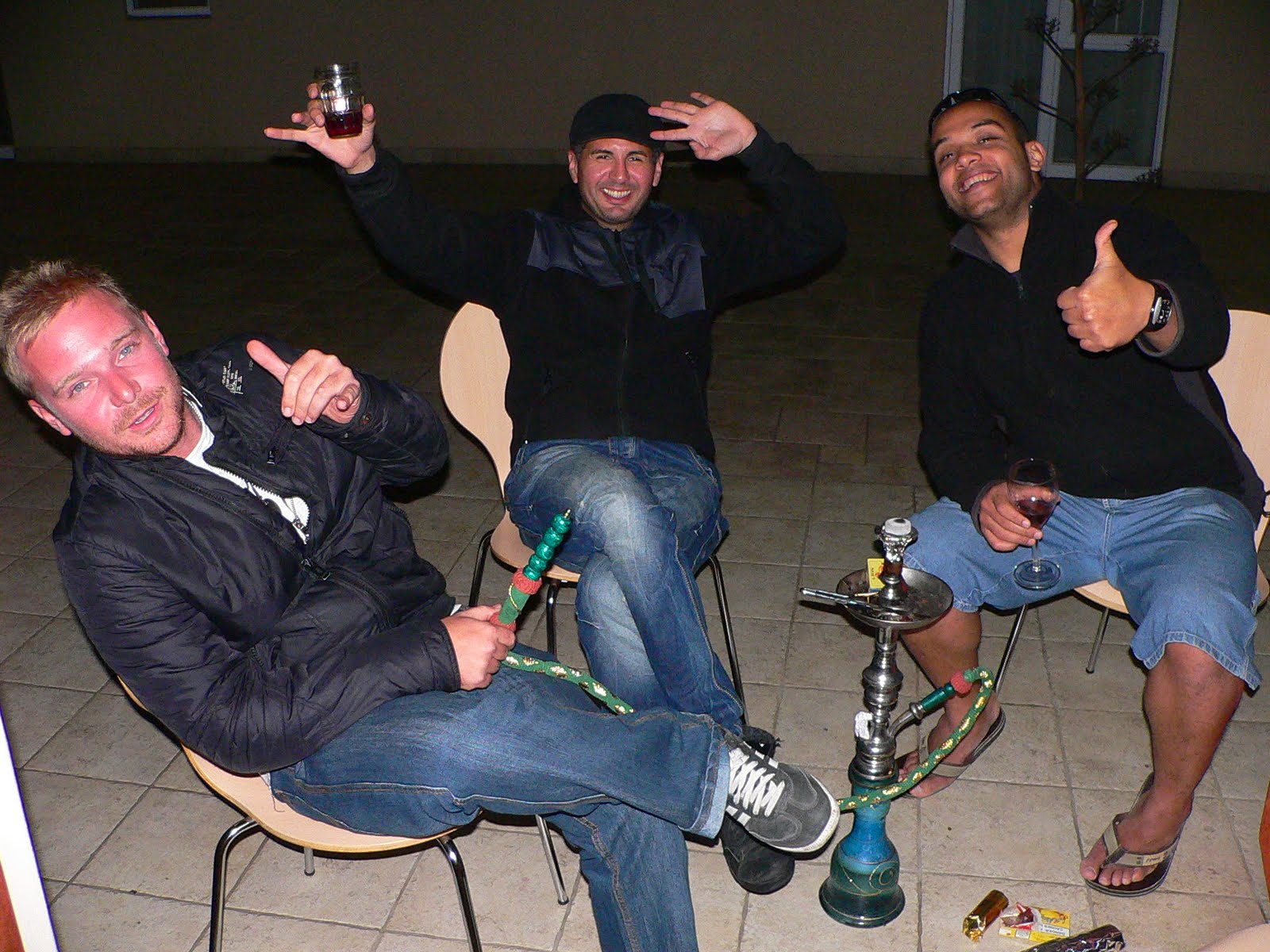
with a nice shishaa
Most of it flying in and out of the bush and over the dunes of the big Namib and the endless plains of the savanna. 
A year ago I just started flying here (and well just started flying at all), and the more I flew the more there was to learn. 
Himba boys
 FLY FOR FUN
Rossing mountain in fog
Swakop river flowing
My man Theo cleaning da plane
Rain and bow over the dunes
Summer over the desert
FLY baby
Something is building 
Resting in the shade
Colors of Ugab
My Cuban wingman
Walvis saltworks with the Kuiseb flowing into the Atlantic
Spitzkoppe
Henties Bay reflections
Underwater over the savanna
Green dunes
 
I still think that this is the best school for a fresh pilot. A couple of hundred hours flown over and into these remote areas will improve not just your flying skills (flying the lovely 210 to her limits safely), but your airmanship as well, and will definitely improve your situational awereness (crowded uncontrolled airspaces can get tricky), and lots more. Not to mention the feeling of belonging to the Brotherhood, where no matter where you come from, no matter what you did before, no matter how old you are  (I know, I know I've had a bit too much of The Right Stuff book). The only thing that matters is whether in the air you know your job and if you're willing to have some chatting after hours at one of the cultural institutions like the Skydivers at the airport or the Kückis or else. I got my biggest compliment when local lots-of-thousand-hours pilots said that they are unhappy because they know that I will soon leave Swakopmund. A compliment that one rarely gets from these old aviators.
End of a nice flight
Swakopmund is still the best kept secret in aviation. I mean low time job wise. Flocks of fresh pilots show up every year in Maun, Windhoek, Dar es Salaam, but just very few make it to Swakopmund. It is true that there are not too many companies here, and decisions are mostly taken in Windhoek, or some companies want to hire only locals or SA pilots. But if one makes it here and gets a job then will probably get a lifestyle that no other African bush flying job can offer. Amazing flying from the desert to the savannah and mountainous areas. From this small Africa-for-dummies town, Jewel of the Atlantic Coast. 
With complicated weather and thrilling winds.
Skydivers night
Love every moment of flying and living here, and a big thank you goes to the owners of Bush Bird Adventure Flights on running a company with the most flight hours in Swakop and thus making this 1000+ hours possible!
Welcome to wherever you are
Enjoy the pictures as much I enjoyed taking them. 
Smooth